New Year's Resolutions for Couples Counseling in Charlotte
As the new year begins, many couples reflect on what they hope will feel different in their relationship. While New Year's resolutions often focus on personal goals such as health, finances, or career direction, relational concerns are frequently postponed or minimized. Many couples assume that once routines settle, there will be more emotional space to address what feels strained. In reality, unresolved tension often carries directly into the new year, shaping how partners communicate, respond to stress, and connect emotionally.
In couples counseling in Charlotte, NC, we at Courtenay Monfore, PLLC, frequently see how this delay unintentionally allows small cracks in the connection to widen over time. Missed bids for connection, unresolved misunderstandings, and unspoken expectations do not disappear simply because the calendar changes. Instead, they often reemerge with greater intensity once the pressures of a new year take hold.
Intentional New Year relationship resolutions offer a different approach. Rather than waiting for a symbolic reset, couples can begin reflecting now on patterns, expectations, and emotional needs that come up in their relationship every day. Taking this step when the new year begins allows growth to unfold gradually instead of under pressure. This article explores how couples can strengthen their connection, reduce recurring conflict, and enter the next chapter with greater clarity and intention.
Key Takeaways
Waiting until January often delays meaningful relationship change.
Relationship-focused New Year goals support prevention rather than crisis management.
Most recurring conflict reflects emotional patterns, not unsolvable issues.
Emotional safety is essential for a lasting connection.
Small, consistent actions create long-term impact.
Early support tends to produce stronger outcomes.
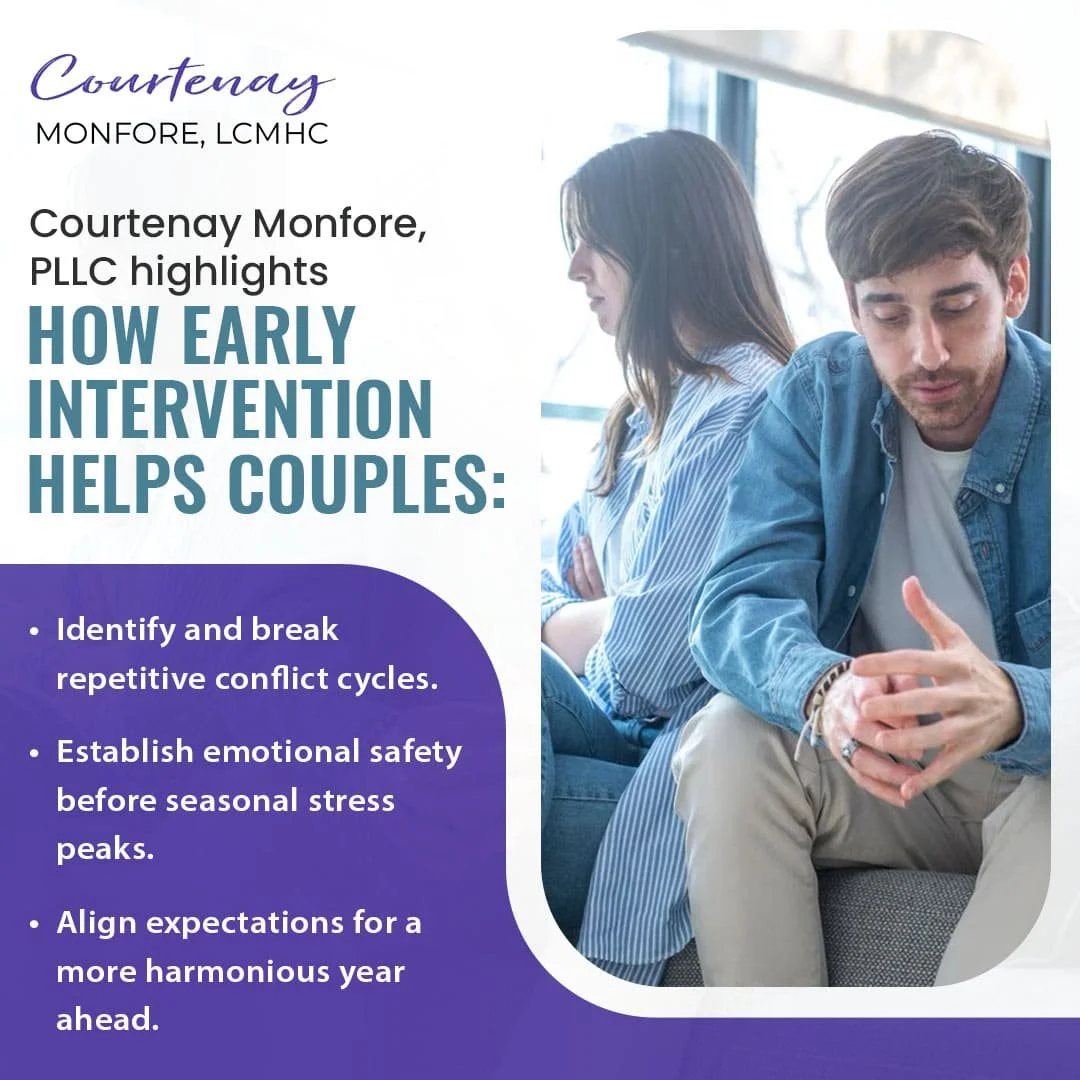
Why Delayed New Year Resolutions Often Fall Short
The idea of a clean slate is psychologically appealing. Many people feel motivated by milestones such as birthdays, anniversaries, or the start of a new year. However, research on self-stigma suggests that when people internalize shame about having a problem or needing support, they may become more reluctant to talk about it or seek help. Corrigan & Rao (2012) describe how self-stigma can shape a person’s willingness to disclose difficulties and can be reduced through strategies that support empowerment and self-acceptance.
In relationships, this delay frequently allows frustration and emotional distance to grow quietly. Couples may stop bringing up concerns because it feels easier in the moment, only to find that silence hardens into resentment. By the time January arrives, partners are often carrying months of unspoken disappointment that make productive conversations more difficult.
This is why our local relationship counselors at Courtenay Monfore, PLLC, encourage couples to begin addressing concerns as soon as they become noticeable. Growth is most effective when it responds to real-time experiences rather than future intentions.
How Stress Compounds Relationship Strain
The end of the year brings predictable stressors, including financial pressure, family dynamics, travel, and increased social obligations. According to the American Psychological Association, nearly 40 percent of adults report elevated stress during the holiday season. When stress levels rise, emotional regulation decreases, making misunderstandings more likely.
Stress also narrows perspective. Partners are more likely to interpret neutral behavior as dismissive or critical when they are overwhelmed. Intentional New Year relationship resolutions help counter this by encouraging couples to distribute emotional effort more evenly, rather than attempting to “fix everything” later.
This approach aligns with how many marriage therapists in Charlotte, NC, work: focusing on prevention, emotional awareness, and regulation rather than crisis response.
Recognizing Patterns Before They Become Entrenched
Many couples feel discouraged because they argue about the same topics repeatedly. Many relationship conflicts are perpetual, meaning they stem from ongoing differences rather than solvable problems. The exhaustion comes not from disagreement itself, but from feeling trapped inside the same emotional loop.
These loops often follow predictable patterns. One partner may pursue connection through discussion, while the other withdraws to manage overwhelm. Over time, both partners feel misunderstood, even though their intentions are protective rather than harmful.
When couples step back to identify these cycles, they often realize the issue is not the topic being discussed, but how each partner responds under stress. This perspective shift is central to the work done by Charlotte's marriage therapists, who focus on emotional patterns rather than surface-level arguments.
Moving From Blame to Awareness
Blame narrows perspective, while awareness expands it. It allows partners to ask, “What’s happening between us right now?” rather than “Who is at fault?”
Intentional New Year relationship resolutions can include conversations about what typically triggers escalation and how each partner protects themselves emotionally. When couples begin naming patterns together, defensiveness often softens. This shared understanding creates room for empathy and lays the groundwork for healthier responses moving forward.
Strengthening Emotional Safety Early in the New Years
Emotional safety refers to the sense that one can be vulnerable without fear of criticism, dismissal, or retaliation. In relationship research, this is often described as perceived partner responsiveness, the feeling that your partner is genuinely attuned to you and responds in ways that help you feel understood, validated, and cared for.
Without this foundation, even well-intentioned communication strategies tend to fall apart. Partners may know what they are “supposed” to say, yet still feel guarded. This is why many relationship counselors in NC prioritize emotional attunement early in the process. Safety allows new skills to take root.
Emotional safety develops when partners feel heard, respected, and emotionally prioritized. It is reinforced through consistency rather than grand gestures.
Small Relationship Resolutions That Build Trust Over Time
Resolutions do not need to be dramatic. Consistent, small actions often have the greatest impact. Setting aside brief, uninterrupted time to check in emotionally can help partners feel seen and valued. These moments communicate, “You matter to me,” even when life feels busy.
Naming stress openly, rather than withdrawing or reacting sharply, also reduces misinterpretation. These practices reflect what relationship counseling in Charlotte often emphasizes: slowing interactions down so emotions can be processed rather than reacted to automatically.
Aligning Expectations and Shared Values
Unspoken expectations frequently drive disappointment. Many couples assume their partner “should know” what they need. When those needs go unmet, resentment builds quietly. Intentional New Year relationship resolutions offer a natural opportunity to clarify these assumptions before they become entrenched.
Discussing expectations openly does not mean demanding agreement. It means creating transparency, which reduces confusion and fosters cooperation.
Creating Meaning Beyond Logistics
Alignment is not about rigid rules, but shared meaning. Couples who articulate common values tend to navigate stress more effectively. Practitioners often recognized as among the best marriage counselors focus on helping couples define what matters most to them as a unit.
Questions such as “What do we want to protect this year?” or “What helps us feel like a team?” can open deeper dialogue. These conversations strengthen emotional connection and create a shared sense of purpose that carries couples through challenges.
When Professional Support Makes a Difference
Many couples assume that seeking help means something is already beyond repair. In our experience, professional support is most effective when couples still care deeply but feel stuck in patterns they cannot shift alone.
Rather than serving as a last resort, therapy provides space to slow interactions down, understand emotional responses, and rebuild trust intentionally. This is why many people explore marriage counselors in Charlotte before resentment becomes entrenched.
The Power of an Outside Perspective
A neutral third party can help translate experiences that feel invisible within the relationship. Each partner’s reactions make sense internally, but without support, those explanations often remain unspoken.
Research from the Gottman Institute shows that couples who learn to recognize and respond to emotional bids experience significantly higher satisfaction. Working with Charlotte's marriage therapists allows these dynamics to be named calmly, reducing defensiveness and increasing empathy.
Addressing Cycles Instead of Symptoms
Arguments about chores or finances often mask deeper emotional patterns, such as pursuit and withdrawal. Effective work focuses on interrupting these cycles rather than assigning fault.
This approach is commonly used by clinicians considered among the best marriage counselors because it leads to sustainable change. When couples recognize their shared cycle, they can respond differently even under stress.
How New Year Relationship Resolutions Support Long-Term Health
One advantage of beginning this work early in the new year is that couples are often not yet in full survival mode. Emotional resources are more available, making it easier to learn and practice new ways of relating.
This proactive approach helps couples build resilience so future stressors feel manageable rather than overwhelming.
Creating a Shared Language for Difficult Moments
Another benefit is the development of shared language. When couples understand concepts such as emotional triggers or protective responses, conversations become less personal and more collaborative.
Shared language allows couples to repair more quickly after conflict, reducing emotional distance over time.
Why Couples Choose to Work With Our Practice
Our work integrates trauma-informed care with clear therapeutic direction. Past experiences often shape present-day reactions, especially during moments of vulnerability.
At Courtenay Monfore, PLLC, we focus on helping couples understand both why patterns exist and how to shift them in daily life.
Flexible, Evidence-Based Methods
We integrate Emotionally Focused Therapy and the Gottman Method to meet each couple where they are at Courtenay Monfore, PLLC. This flexibility allows us to support emotional depth while also providing practical tools for change.
Choose Professional Marriage Counselling Services Today
New Year relationship resolutions invite couples to act with intention rather than urgency. By recognizing emotional patterns, strengthening emotional safety, and aligning expectations early in the year, partners create a more stable foundation for lasting change.
Growth does not require perfection. It requires awareness, patience, and consistency. When couples invest in their relationship at the start of the year, they often prevent deeper strain later on. To learn more about working with our local marriage counselors in Charlotte, contact Courtenay Monfore, PLLC at (704) 741-2082 or hello@courtenaymonfore.com.
