Spring Cleaning In Relationship Counseling: Letting Go of What’s Not Working
Every spring, we clear out closets, wipe down baseboards, and decide what no longer belongs in our homes. But what about your relationship?
If you’ve been feeling distant, reactive, or stuck in the same argument on repeat, you may have wondered whether couples counseling could help you reset. Most relationships don’t fall apart in one dramatic moment. They slowly collect unspoken hurts, misunderstandings, and protective habits.
In this post, I want to guide you through what it truly means to “spring clean” your relationship. We’ll look at what to release, what to repair, and how to rebuild closeness in a way that feels grounded and realistic.
Key Takeaways
Small defensive habits, unspoken disappointments, and repeated arguments can slowly create distance if they’re not addressed directly.
The problem is often the pattern, not the person. Identifying and interrupting negative cycles is more effective than focusing on who is “right” or “wrong.”
Resentment needs a safe space to be processed. Letting go doesn’t mean minimizing hurt. It means slowing conversations down and addressing deeper needs underneath conflict.
Communication is a skill that can be strengthened. With structure and practice, couples can replace reactive habits with clearer, calmer, and more intentional responses.
Support can accelerate growth. Working with a trained professional can provide the tools, accountability, and emotional safety needed to rebuild connection in a steady, lasting way.
Noticing the Emotional Clutter Between You
Emotional clutter builds quietly. It might look like eye-rolling when your partner speaks. It might sound like sarcasm that carries more edge than humor. It might feel like withdrawing because staying silent seems safer than trying again.
Over time, these small protective moves become patterns.
I often see couples who aren’t trying to hurt each other. They’re trying to protect themselves. When you feel unseen or criticized, your nervous system reacts quickly. You defend. You shut down. You counterattack.
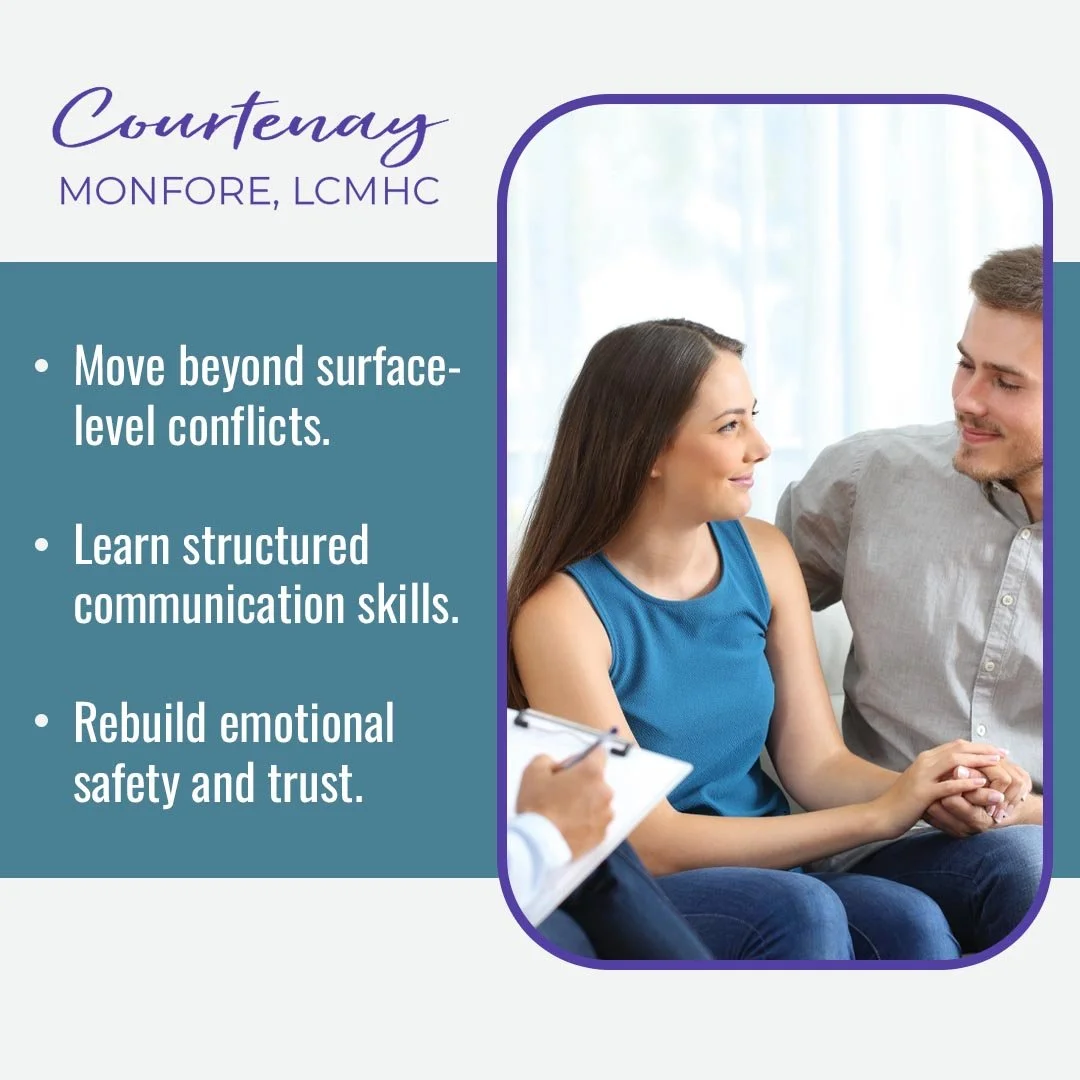
When Arguments Become a Predictable Loop
At first, disagreements are about practical things. Chores. Schedules. Parenting decisions. Eventually, they stop being about the surface issue and start being about something deeper.
You might notice a familiar script:
One of you raises a concern.
The other feels blamed.
Voices get sharper.
Someone walks away.
Many people reach out to local marriage counselors at this point. Not because they’ve given up, but because they’re tired of living in the same exhausting loop.
Spring cleaning begins by identifying the cycle. The problem is not one of you. The problem is the pattern you’re caught in together.
Letting Go of the Pressure to “Have It All Together”
One of the heaviest things couples carry is the belief that they shouldn’t be struggling. You may look around and think everyone else seems fine. You may tell yourself, “We’re adults.
We should be able to figure this out.”
That belief alone can keep you from contacting a marriage therapist when you actually need support.
Why Reaching Out Is a Strength
When couples come to see me, they often say, “We’ve tried everything.” That tells me something important. You care. You’ve invested energy. You haven’t walked away.
Working with marriage therapists is not about proving something is broken beyond repair. It’s about learning skills most of us were never taught.
At Courtenay Monfore, PLLC, I combine Emotionally Focused Therapy and the Gottman Method because both offer clear tools for rebuilding connection. Many therapists focus on only one approach. I believe both provide powerful structure. Letting go of the myth of the perfect relationship creates space for honest growth.
Releasing Resentment Before It Hardens
Resentment rarely explodes all at once. It settles in layers. A dismissive comment here. A forgotten promise there. A moment when you needed comfort and didn’t receive it.
You may not talk about these moments because you don’t want to “start something.” But they don’t disappear. They accumulate. Many marriage counselors in NC see this pattern: couples who look calm on the surface but carry years of unspoken hurt.
Creating Conversations That Feel Safer
One of the first things we do in therapy is slow conflict down. When conversations escalate quickly, it’s usually because something vulnerable is underneath. Maybe it’s fear of not being enough. Maybe it’s fear of losing each other. In session, I help you identify what you’re really feeling beneath the frustration. Instead of “You never listen,” we might uncover, “I feel alone when I talk and don’t feel heard.”
That shift changes everything. Letting go of resentment doesn’t mean pretending it didn’t hurt. It means finally giving it space to be processed safely.
Clearing Out Communication Habits That No Longer Serve You
Some communication habits feel automatic. Assuming you know what your partner will say. Avoiding difficult topics because you’re afraid they’ll spiral. Raising your voice to feel heard. These patterns develop for a reason. At some point, they helped you cope. But what once protected you may now be pushing your partner away.
When people search for the best marriage counselors in Charlotte, NC, they are often hoping for tools they can actually use outside the therapy room.
Practicing Something Different
In my work at Courtenay Monfore, PLLC, we don’t just talk about change. We practice it.
We practice reflective listening. We practice pausing when emotions spike. We practice expressing needs clearly instead of hinting or criticizing.
Many of the best couples counselors focus on building skills that create long-term shifts. Insight alone is not enough. You need a roadmap. Trying new communication strategies may feel awkward at first. That’s normal. Growth often feels uncomfortable before it feels natural.
Spring cleaning your communication means being willing to experiment with new ways of showing up.
Making Room for Emotional Safety Again
When tension lingers, your body starts to brace. You may find yourself scanning for signs of criticism. You may hold back thoughts to avoid conflict. You may feel more like roommates than partners.
Emotional safety is not dramatic. It’s steady. It’s knowing that if you bring up something vulnerable, you won’t be attacked. It’s trusting that your partner will turn toward you instead of away.

Rebuilding Connection Step by Step
Many of the best marriage counselors emphasize small, consistent repairs over grand gestures.
In relationship counseling in Charlotte, I often guide couples to focus on micro-moments. A five-minute check-in before bed. A softer tone. A small acknowledgment of effort.
These shifts may seem minor. They are not. If you’ve considered speaking with a relationship counselor, it likely means part of you still believes your relationship can feel better. That hope is important.
Connection is rarely restored through one big breakthrough. It’s rebuilt through repeated, intentional moments of turning toward each other.
Knowing When It’s Time for Support
There comes a point when trying harder doesn’t fix the pattern. If conversations consistently escalate, if emotional distance has become your normal, or if you feel stuck in blame and defensiveness, outside support can interrupt that cycle.
Not all therapists approach relationships in the same way. Some focus primarily on insight. Others emphasize tools. The best marriage counselors integrate both.
At Courtenay Monfore, PLLC, I take a goal-oriented approach. From the first session, we clarify what you want to feel differently. We identify the root patterns keeping you stuck. Then we begin shifting them. If you’re exploring options among marriage counselors, consider whether the therapist offers structure, warmth, and clear direction.
You deserve support that feels both compassionate and practical.
Clearing the Space for Something Stronger
Spring cleaning your relationship isn’t about tearing everything down. It’s about clearing what blocks closeness.
You can interrupt negative cycles. You can process old hurts. You can learn new ways of communicating that feel steadier and more connected. Most importantly, you don’t have to navigate this alone.
If you’re ready to create a relationship that feels more secure and supportive, I invite you to reach out to Courtenay Monfore, PLLC, in Charlotte to schedule a consultation at (704) 741-2082 or hello@courtenaymonfore.com to learn more. Let’s clear the space for something stronger, together.
